
NASA's Artemis Mission: Preparing for a New Era of Lunar Exploration

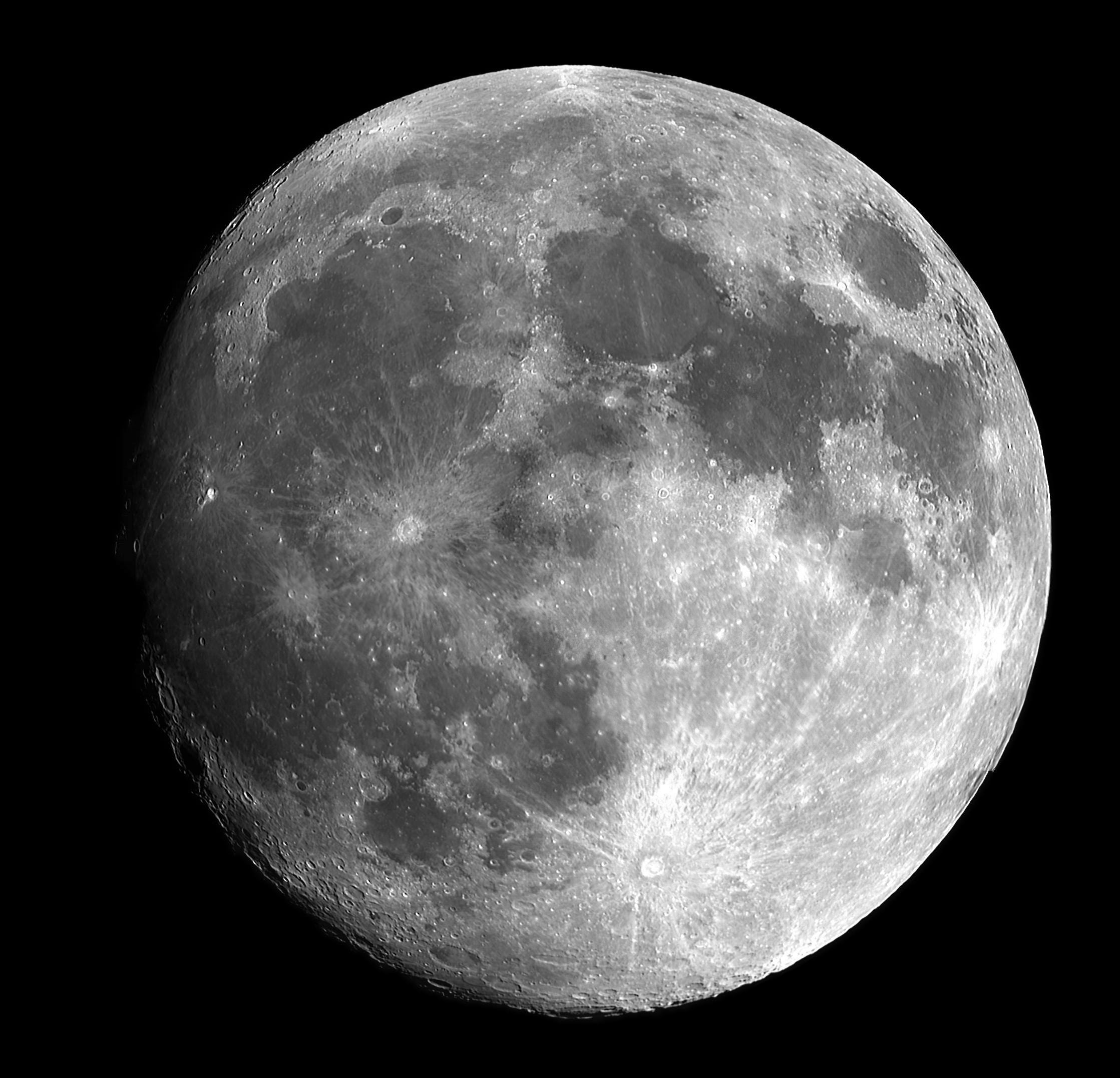
In the early hours of the space race, the world watched in awe, as humans first set foot on the moon. NASA's Apollo missions became synonymous with innovation, evolution and the achievement of human spirit. Now, more than five decades later, the world is preparing to witness a new step in lunar exploration, with NASA's aspiring Artemis program.
The Artemis mission, named after the Greek goddess of the Moon and twin sister to Apollo, is not just a return to the moon˙ it's a leap toward establishing a sustainable human presence on our nearest celestial neighbor. This strive is set to open new horizons for scientific discovery, international collaboration and private industry participation, heralding a new era of space exploration that looks far beyond the moon.
A New Vision: Going Back to Stay
Unlike the Apollo missions, which had a singular goal of planting the flag and returning safely, Artemis has a broader and more ambitious scope. NASA’s ultimate goal is to return humans to the lunar surface by 2025, land the first woman and the next man on the Moon and, eventually, establish a permissible presence, by the end of the decade.
This time, astronauts will land on the lunar South Pole, an area largely unexplored but potentially rich in water ice, which could be a transformative breakthrough, for future exploration. Water can not only support life, but it can also be split into hydrogen and oxygen, key components for rocket fuel, authorizing further exploration of deep space.
The Artemis program aims to develop the necessary technology and infrastructure to make the Moon a stepping stone for more ambitious missions, including sending astronauts to Mars in the 2030s. NASA Administrator Bill Nelson recently emphasized this statement: “The Moon is our proving ground for the ultimate goal of humanity stepping foot on Mars. Artemis is critical to making this a reality.”
Essential Components of the Artemis Mission
At the core of the Artemis program are several cutting-edge systems designed to revolutionize how humans travel and live in space.
Space Launch System (SLS): This powerful rocket, standing taller than the Statue of Liberty, will be the backbone of Artemis, carrying astronauts, cargo and equipment beyond Earth's orbit. It is announced as the most powerful rocket ever built, capable of launching humans to the Moon and beyond.
Orion Spacecraft: NASA’s deep-space crew vehicle, Orion, will ferry astronauts to lunar orbit and back to Earth. It is designed to sustain crews for longer durations than Apollo's spacecraft, with state-of-the-art life support and safety systems.
Gateway: Artemis introduces a new concept˙ an orbiting lunar outpost known as Gateway. Positioned in orbit around the Moon, this station will act as a hub for astronauts to live, work and transfer to lunar landers. The Gateway will also serve as a platform for scientific research and as a staging point for missions to Mars.
Human Landing Systems (HLS): These systems will take astronauts from lunar orbit to the Moon's surface. Notably, NASA has collaborated with private companies like SpaceX, which is developing a version of its Starship vehicle to serve as the primary lunar lander.
Lunar Base Camp: By the late 2020s, NASA aims to establish a sustainable lunar base, allowing astronauts to live on the Moon for extended periods. This base will be equipped with habitats, rovers and research facilities, designed to facilitate deep-space exploration and long-term dwelling.
International and Commercial Collaboration
One of the distinguishing features of Artemis is its international reach. NASA has created partnerships with other space agencies through the Artemis Accords, a set of principles designed to guide cooperation in space exploration. Countries like Canada, Japan and members of the European Space Agency (ESA) are contributing fundamental technologies, including lunar rovers, robotic systems and modules for the Gateway.
Additionally, private companies are playing a novel role. SpaceX, Blue Origin and other business entities are working with NASA to develop lunar landers, cargo transports and habitation systems. This public-private partnership model is expected to accelerate innovation, reduce costs and open the door for private industry to participate in future space ventures.

The Challenges Ahead
While the Artemis mission represents an enthralling future for space exploration, it’s not without challenges. The complexities of landing humans safely on the lunar surface, particularly in the rough ground of the South Pole, require precise engineering and advanced technologies.
Furthermore, sustaining human presence on the Moon will require overcoming the harsh environment, including extreme temperature swings, high levels of radiation and long lunar nights that last nearly 14 Earth days. NASA is developing new systems to protect astronauts, harness energy from the Sun and create habitats capable of withstanding these conditions.
The cost of Artemis, which is projected to reach tens of billions of dollars, has also drawn scrutiny from lawmakers and budget-watchers. But proponents argue that the long-term benefits (ranging from scientific advancements to the economic stimulus of the space industry) exceed the initial investment.
The Dawn of a New Space Age
As the Artemis mission prepares to take flight, the excitement around lunar exploration is palpable. The first uncrewed test flight, Artemis I, is already paving the way, with astronauts set to return to lunar orbit aboard Artemis II. By 2025, humanity will once again set foot on the Moon, which is the beginning of a new chapter in space exploration.
The Artemis program not only symbolizes a return to the Moon but a giant leap toward a future where space is no longer the final frontier but an extension of human aspiration. As we look up at the Moon, we are reminded of our past achievements and are inspired by the future, that lies just beyond the horizon.
“We’re going back to the Moon,” said NASA astronaut Christina Koch, “but this time, we’re going to stay.”
References
"Artemis III: NASA’s First Human Mission to the Lunar South Pole" – NASA.gov
"NASA Artemis Mission: Returning Humans to the Moon" – Space.com
"NASA’s Artemis II Mission: Preparing for a Crewed Lunar Flyby" – NASA.gov