
Building a Quantum Internet: How Quantum Networks Will Revolutionize Communication


The advent of the quantum internet manifests a monumental quantum leap in communication technology, promising remarkable levels of security, speed and computational power. While still in its infancy, quantum networks are composed to revolutionize the approach we share information, collaborate across borders and even compute. This article explores what quantum internet entails, its foundational principles and its transformative potential.
The Quantum Difference
Unlike classical internet networks that rely on binary data (0s and 1s), quantum networks utilize quantum bits or qubits. Qubits have the unique capability to exist in a superposition of states, meaning they can represent both 0 and 1 simultaneously. This property enables quantum systems to perform multiple calculations directly, providing immense computational power.
Quantum networks also leverage entanglement—a phenomenon where particles become interconnected, such that the state of one particle instantly influences the state of another, regardless of distance. This feature lays the foundation for secure and instantaneous communication.
Core Components of Quantum Internet
Building a quantum internet involves integrating several cutting-edge technologies:
Quantum Repeaters: These devices extend the range of quantum communication by countering the loss of signal in quantum channels.
Quantum Key Distribution (QKD): A method for securely transmitting encryption keys using quantum mechanics, ensuring that any eavesdropping attempt disrupts the communication and is immediately detectable.
Quantum Memory: Essential for storing qubits, enabling synchronization and reliable data transfer across networks.
Quantum Protocols: Specialized communication rules designed to handle the unique properties of quantum information.
Applications of Quantum Internet
The quantum internet’s potential applications span numerous fields, each poised for transformation:
Unhackable Communications: With QKD, quantum networks can create cryptographic keys immune to interception, making data breaches virtually impossible.
Advanced Scientific Collaboration: Researchers can share massive datasets and perform collaborative quantum computations in real-time.
Secure Financial Transactions: Financial institutions can adopt quantum protocols to safeguard transactions and prevent fraud.
Quantum Cloud Computing: Users can access quantum computational resources remotely, solving problems intractable for classical computers.
Healthcare Innovations: Quantum networks could facilitate secure sharing of sensitive medical data and enhance drug discovery through quantum simulations.
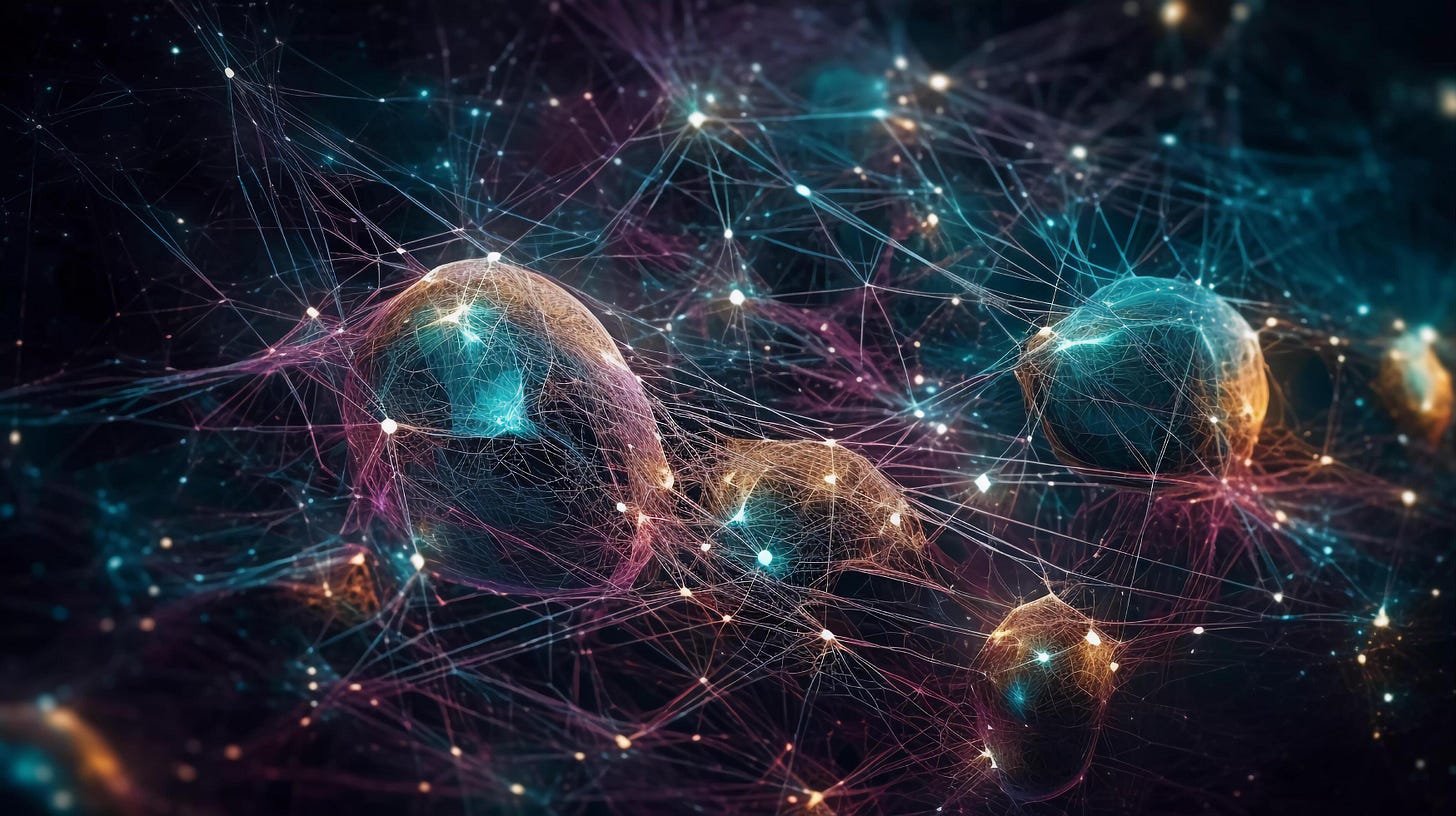
Connections and Communication (src:pexels.com)
Challenges in Building Quantum Internet
The road to a fully functional quantum internet is fraught with technical and logistical hurdles:
Fragility of Qubits: Qubits are highly susceptible to environmental noise, requiring advanced error correction techniques.
Infrastructure Development: Existing communication networks must be overhauled to accommodate quantum technologies.
Standardization: Establishing universal protocols and standards for quantum communication is essential for global adoption.
Cost: The development and deployment of quantum hardware remain expensive, hindering large-scale implementation.
Global Progress and Future Outlook
Countries and institutions worldwide are investing heavily in quantum research and infrastructure. The European Union’s Quantum Flagship program, China’s quantum satellite experiments and the United States’ Quantum Internet Blueprint are spearheading progress in this domain.
In the coming decades, we can expect quantum networks to interconnect with classical systems, creating hybrid infrastructures. As technological breakthroughs address current limitations, the quantum internet will transition from a futuristic concept to a fundamental aspect of our digital landscape.
Conclusion
The quantum internet is not merely an incremental upgrade; it’s a paradigm shift that will redefine communication and computation. As researchers and engineers overcome the challenges of this nascent technology, the possibilities for its impact on society are boundless. From secure communications to revolutionary advancements in science and medicine, the quantum internet holds the promise of a brighter, more connected future.
References
Kimble, H. J. (2008). "The quantum internet." Nature, 453(7198), 1023-1030. doi:10.1038/nature07127
Wehner, S., Elkouss, D., & Hanson, R. (2018). "Quantum internet: A vision for the road ahead." Science, 362(6412). doi:10.1126/science.aam9288
Lo, H. K., Curty, M., & Tamaki, K. (2014). "Secure quantum key distribution." Nature Photonics, 8(8), 595-604. doi:10.1038/nphoton.2014.149
Sangouard, N., Simon, C., de Riedmatten, H., & Gisin, N. (2011). "Quantum repeaters based on atomic ensembles and linear optics." Reviews of Modern Physics, 83(1), 33. doi:10.1103/RevModPhys.83.33
Pirandola, S., Braunstein, S. L., & Lloyd, S. (2015). "Advances in quantum cryptography." Nature Photonics, 9(6), 397-402. doi:10.1038/nphoton.2015.83